What changes, your three paths forward, and how to keep your reports running on each.
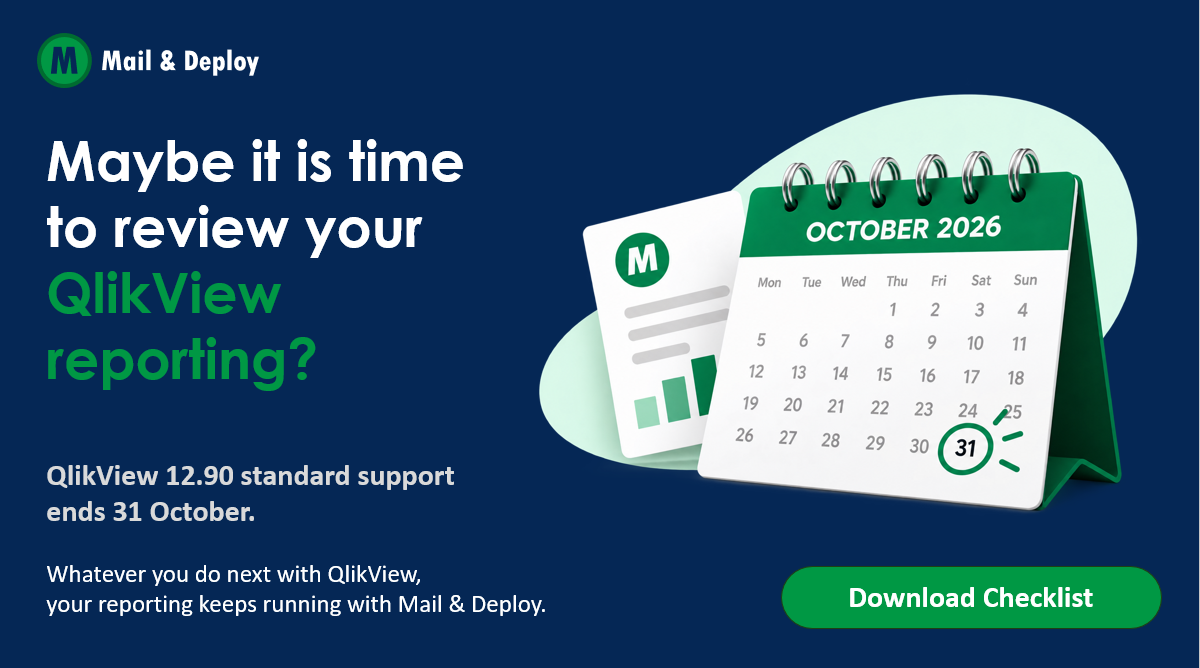
If you run QlikView 12.90, put 31 October 2026 in your calendar. That is the day Qlik’s standard support for the May 2024 release ends.
First, what this is not: it is not the end of QlikView. Support is ending for one release, Qlik keeps shipping QlikView updates, and the current release is supported until September 2027.
But a support date is a natural moment to step back and ask a practical question. Whatever you do next with QlikView, what happens to the reports your business depends on?
According to Qlik’s QlikView Product Lifecycle page, QlikView 12.90 reaches end of support on 31 October 2026. After that date, it no longer receives fixes or security updates. Your QlikView keeps running; it just runs without a safety net.
A few related facts worth knowing:
Most QlikView teams we talk to are weighing three options. Each has its own timeline, cost and effort, and each touches your reporting differently.
There is no single right answer. The right path depends on your licenses, your apps, your team and how fast you want to move.
Platform decisions get the attention: licenses, apps, data models, servers. The reports that come out of QlikView every day often get looked at last. Think of the Monday sales pack, the branch reports, or the PDFs your partners and customers rely on.
Those reports are what most of your organization actually sees of QlikView. When they break during a migration, people notice immediately.
Before you decide on a path, five questions tell you how much reporting work is really ahead:
If the answers include many personalized reports, NPrinting templates or recipients without a Qlik license, plan your reporting early rather than after the switch. Reports tend to break after the migration, when there is no time left to fix them calmly.
We built Mail & Deploy so that reporting is not the thing that holds a platform decision back. It works with QlikView, Qlik Sense and Qlik Cloud, so your report designs, recipient lists and schedules stay in one place whichever platform runs underneath.
That means you can upgrade, migrate in stages, or run old and new platforms side by side for a while, and your reports keep arriving throughout. What else teams value:
You don’t need to have your platform decision made to start. Begin with your reports.
Download the free checklist: a one-page guide to making sure your reports keep arriving, whichever path you choose.
Book a free 30-minute Reporting Continuity Check: we map your reports together, look at your path and flag the risks, from NPrinting templates to recipients without licenses.
Whatever you do next with QlikView, your reporting keeps running with Mail & Deploy.